
“Danny Boy” banned from New York Irish pub
“Danny Boy” banned from New York Irish pub
I can’t say that I was disappointed to hear that the song “Danny Boy” has been banned from New York’s Foley’s Irish pub for the month of March in the run-up to St. Patrick’s Day.
Despite having a reputation as one of the quintessential Irish ballads, it’s another pure product of showbiz à la Tin Pan Alley.
The song was written by an English lawyer Frederick Weatherly in 1913, based on the traditional Irish melody “Derry Air” (or “Londonderry Air” – explained in the book). The first reference to the melody is from 1796, where it was described as “ancient”. His sister-in-law sent him a copy of the original melody, but he always maintained it was his own work. She and her husband Eddie later died in poverty while Weatherly enjoyed both the fame and wealth of Danny Boy’s worldwide success.
Apparently, Weatherly had never even visited Ireland. The song went on to become a hit when recorded by opera singer Ernestine Schumann-Heink in 1913. Despite being massively popular in New York and elsewhere, it is rarely sung in Ireland – which has enough big ballads without importing others. Judy Garland, Bing Crosby, Johnny Cash and Elvis Presley have all done memorable versions.
A classic weepie
“Danny Boy” is, nonetheless, a classic weepie although it’s not clear whether it is a lover or a mother speaking to the departing Danny. Who could resist the maudlin sentiment of:
And if you come, when all the flowers are dying
And I am dead, as dead I well may be
You’ll come and find the place where I am lying
And kneel and say an “Ave” there for me.
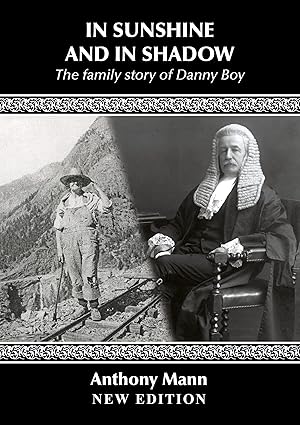
“Danny Boy” has been the subject of a book by the writer’s grandson, Anthony Mann. It covers the many migrations of the 19th century and charts the surprising way the song came together and later became so closely associated with the Irish emigrant experience.
Find lyrics by Michael Leahy
Good Layout and Design. I like your blog. I just added your RSS feed to my Google News Reader. . 🙂 🙂 🙂